


 McPherson Automotive
AUTONET TV
Archive for January 2026Beginning to See the Light (Check Engine Light Diagnostics)Posted January 25, 2026 1:36 PMIt's a light many drivers fear they'll see turn on at the most inopportune time. It's the one on the dash that says "Check Engine," "Service Engine Soon," or it may be simply an engine-shaped light. Your first instinct may be to pull off to the side of the road and turn off the engine. The truth is that Check Engine light can be pointing to problems as simple as a loose gas cap. But it could be as serious as a severely misfiring engine. Don't ignore it because it's there to help you avoid an expensive repair it is designed to alert you to, to tell you something's not quite right. Your vehicle has a connected system of computers and sensors constantly checking to see that all systems are working the way they should. If something isn't, the system will turn on the Check Engine light. If it's flashing, that could be serious. Look at some of the other warning lights or gauges such as heat or oil pressure. They could be telling you your vehicle's problem should be checked right away. In that case, if you can, safely pull off the road and shut the vehicle down. If your vehicle loses power and the Check Engine light is on, try not to push the demands you are making on the engine, such as towing or accelerating hard. Simply put, a flashing Check Engine light should be checked out by a professional as soon as possible. If the Check Engine light is on steadily, manufacturers say it means there's a problem, but it probably doesn't require immediate service. The system is designed to remember the problem it found and store it (as a code) so it can be retrieved later. When you do bring your vehicle in to have us see what's behind the Check Engine light coming on, we’ll hook your vehicle up to a diagnostics tool that can reveal the clues the engine's computers have stored. It takes a trained technician to understand those clues, like a doctor who can interpret a patient's symptoms and come up with the correct diagnosis. Some newer vehicles can even be checked remotely. Once we figure out the problem and repair it, you'll be back on the road again. It's nice to know the Check Engine light is your sentry, standing by to alert you the next time you begin to "see the light." McPherson Automotive Talk about Engines (Causes of Rough Engine Idling)Posted January 18, 2026 12:45 PMYou can help your service facility by describing the problem in detail. Here's a list of things to make a note of:
Make sure you describe the problem in as much detail as possible, as it will help a technician diagnose it. One of the first things they'll check is how the spark plugs are firing. Modern iridium plugs are supposed to last a long, long time. But they CAN eventually wear out. Inspecting the firing end can help the technician identify the root cause of the problem. Corroded or worn-out spark plug wires can also contribute to an idling irregularity. There are other potential problem spots, too. The technician may check the ignition coil, timing, piston rings, valves, and cylinder walls. If the air-to-fuel mixture isn't correct, it may affect how smoothly your vehicle runs. Your service facility is equipped with diagnostic tools that help pinpoint the problem. Once that idle is smoothed out to the way it used to be, you'll be the smoothest operator on the road.
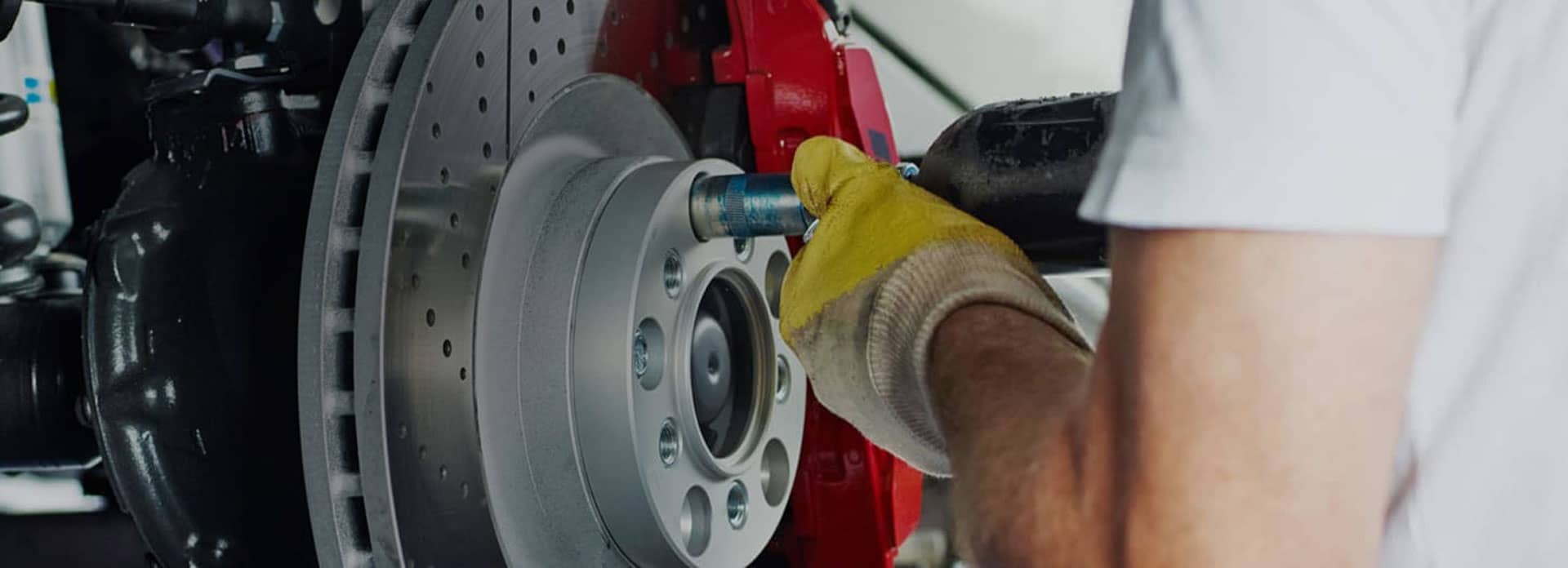
McPherson Automotive Don’t Meddle with the Pedal (Brake Caliper Replacement)Posted January 11, 2026 2:04 PMIf you drive a newer vehicle, chances are it has disc brakes, and one of the components of that type of brake is called a brake caliper. The caliper allows the pressure from your foot on the brake pedal to eventually move brake pads against discs in your wheels, which then slow and stop your vehicle. If you have disc brakes on all 4 wheels, your vehicle will have 4 calipers. If you have them just on the front wheels, you’ll only have 2 calipers. Because your wheels and brakes do their work outside and on the road surface, they are exposed to a lot of dirt and debris, as well as enduring heat, cold, moisture and tough treatment in daily driving. Your calipers have seals that are susceptible to the heat generated during the repetitive stops in normal driving, which can take a tough toll on those seals. If you drive when your vehicle’s brake pads and rotors are worn, you can ruin your calipers in the process. Here are a few signs that a caliper might be failing: Your vehicle is pulling to one side when you apply the brakes. Your pedal goes down to the floor when you push on it. You hear squeaking from the wheels while braking. You notice brake fluid on the pavement underneath your vehicle after you’ve parked it for a few hours. If you are getting any of those warning signs, it’s important to have one of our technicians determine what’s going on. There are several brake components that contribute to your vehicle’s safe operation, including the calipers, pads, rotors, brake lines and brake fluid. Regular brake maintenance is recommended in your vehicle’s owner’s manual to prevent dangerous surprises. And when you see issues, have your brakes serviced as soon as you see signs of trouble. McPherson Automotive Oil's Well That Ends Well (Oil Change Grades and Weight)Posted January 4, 2026 1:30 PMChanging your oil regularly is one of the most important things you can do to keep your vehicle running well. And knowing the right type of oil to use is also very important. Engine oil is classified by weight, but it doesn't refer to how much the oil would weigh if you put it on a scale. It refers to viscosity, or how easily the oil flows through the engine. Most engines operate normally at around 210°F/99°C. The viscosity, or weight, is assigned a number by how well it flows at that temperature. The lower the number, the more freely it flows. Most vehicle engines use what's called a multigrade oil which behaves differently in different temperatures. Multigrade oils have a "W" in their viscosity number that you may have seen on a bottle of oil, something like 5W30. The W stands for winter and shows how freely it flows in colder temperatures. That means a 5W30 oil will behave like a 5 weight oil in lower temperatures (less viscous or thinner) and a 30 weight oil in warmer temperatures (more viscous or thicker). That's important on a cold day because the oil needs to behave like a thinner oil when you start your engine since it need to lubricate engine components immediately to protect the metal components. Then as the engine warms up, it behaves like a thicker oil to prevent friction among those parts. Pretty neat trick, right? The type of oil you use can differ depending on what type of climate you operate your vehicle in and how your vehicle is used (carrying big loads, towing, etc.). Your owner's manual contains several different recommendations based on these factors. Your service advisor can recommend the right oil for your needs. Like Shakespeare said, "Oil's well that ends well." McPherson Automotive | ||
SearchArchiveJuly 2018 (16)August 2018 (4) September 2018 (5) October 2018 (4) November 2018 (4) December 2018 (5) January 2019 (5) February 2019 (4) March 2019 (5) April 2019 (4) May 2019 (4) June 2019 (5) July 2019 (4) August 2019 (4) September 2019 (5) October 2019 (4) November 2019 (4) December 2019 (5) January 2020 (5) February 2020 (4) March 2020 (5) April 2020 (4) May 2020 (5) June 2020 (4) July 2020 (4) August 2020 (5) September 2020 (4) October 2020 (4) November 2020 (5) December 2020 (4) January 2021 (6) February 2021 (4) March 2021 (4) April 2021 (4) May 2021 (5) June 2021 (4) July 2021 (4) August 2021 (5) September 2021 (4) October 2021 (5) November 2021 (4) December 2021 (4) January 2022 (6) February 2022 (4) March 2022 (4) April 2022 (4) May 2022 (5) June 2022 (4) July 2022 (5) August 2022 (4) September 2022 (4) October 2022 (5) November 2022 (4) December 2022 (4) January 2023 (5) February 2023 (4) March 2023 (4) April 2023 (5) May 2023 (4) June 2023 (4) July 2023 (5) August 2023 (4) September 2023 (4) October 2023 (5) November 2023 (4) December 2023 (5) January 2024 (5) February 2024 (4) March 2024 (5) April 2024 (4) May 2024 (4) June 2024 (5) July 2024 (4) August 2024 (4) September 2024 (5) October 2024 (4) November 2024 (4) December 2024 (5) January 2025 (4) February 2025 (4) March 2025 (5) April 2025 (4) May 2025 (4) June 2025 (5) July 2025 (4) August 2025 (5) September 2025 (3) October 2025 (4) November 2025 (5) December 2025 (4) January 2026 (4) February 2026 (4) March 2026 (5) April 2026 (4) May 2026 (5) June 2026 (4) July 2026 (4) August 2026 (5) September 2026 (4) | CategoriesMaintenance and Repair (436) | |

OUR REVIEWS

partners